


What is an ileostomy?
This page is all about what an ileostomy is and what it means for you. We’ll walk through the basics so you feel informed and ready.
Ileostomy Surgey
Understanding your ileostomy and what to expect
There are three types of stoma. A colostomy, urostomy and the one we are going to talk about here, an ileostomy.
An ileostomy is created by bringing a part of the small bowel called the ileum through a surgical opening on the abdomen. This diverts the waste into a pouch, which varies from liquid to a more porridge-like consistency.
Why you might need an ileostomy
An ileostomy can be required at any age and is needed as a solution for many different medical conditions including:
- Cancer
- Crohn’s Disease
- Ulcerative Colitis
- Trauma
- Continence issues
- and many others.
Types of ileostomy
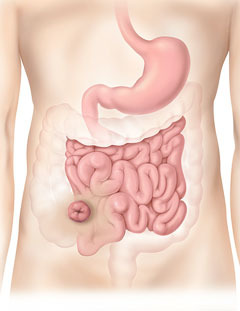
- You will hear these referred to as either an End or a Loop. Both End and Loop can be temporary or permanent.
- An End ileostomy is formed when the end of your small bowel is brought to the surface of your abdomen. If your surgeon advises it is temporary, it may be possible to re-join your small bowel in the future. Simply ask your surgeon or specialist stoma nurse about your options.
- A Loop ileostomy is formed when a Loop of the small bowel is brought to the surface of the abdomen and opened to form your stoma. Generally referred to as a temporary stoma but may also be permanent.
Your surgeon and/or specialist stoma nurse will advise whether your surgery can be reversed at a later date. - Because the ileum contains digestive enzymes and acids that may cause skin irritation, extra care is needed for an ileostomy to keep waste materials from coming into contact with the skin on your abdomen.1
- Drink plenty of water and fluids - at least six to eight cups (1.4 - 1.9 litres) per day. Having an ileostomy may make you more prone to dehydration, which could lead to the loss of important minerals your body needs.2
Useful links
Featured ileostomy products
Esteem Body™ Soft Convex One-Piece Drainable Pouch - with window
Esteem®+ One-Piece Drainable Pouch
Natura® Invisiclose® + drainable pouch with Lock-it Pocket™
Natura® Accordion with ConvaTec Mouldable Technology™
Diamonds™ Gelling and Odour Control Sachets


1. What is an ostomy? page. United Ostomy Associations of America Web site. http://www.uoaa.org. Accessed December 10, 2015.
2. Evangelos M, M.D., Ph.D. • Rishabh S, M.B., B.Ch. • Susan D, B.A. Walter A. K, M.D. • David S, M.D. • Kevin McK, M.D. Lisa S. P, M.D. Readmission for Dehydration or Renal Failure After Ileostomy Creation. Diseases of the Colon & Rectum. 2013; v:56; i:8; p:974-979